O God of earth and altar,
Bow down and hear our cry,
Our earthly rulers falter,
Our people drift and die;
The walls of gold entomb us,
The swords of scorn divide,
Take not thy thunder from us,
But take away our pride.
From all that terror teaches,
From lies of tongue and pen,
From all the easy speeches
That comfort cruel men,
From sale and profanation
Of honour and the sword,
From sleep and from damnation,
Deliver us, good Lord.
Tie in a living tether
The prince and priest and thrall,
Bind all our lives together,
Smite us and save us all;
In ire and exultation
Aflame with faith, and free,
Lift up a living nation,
A single sword to thee.
- G.K. Chesterton
Showing posts with label Chesterton. Show all posts
Showing posts with label Chesterton. Show all posts
Monday, August 17, 2009


Wednesday, July 29, 2009
Google has gone too far now, perfecting the art of time travel, they have taken their satellites back in time to capture some important moments in history from a Google Earth perspective. Here is one image they have brought us.
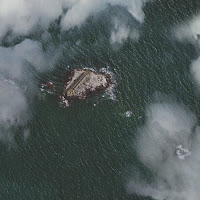
This is the top of Mount Ararat, just as the ark has settled onto the dry ground.
Seriously though, this image came from a website called the Glue Project and they have done a few interesting images called God's Eye View, essentially photoshopping some images to look like events from the Bible. The Ark one was neat. So it this one from the Red Sea Crossing.
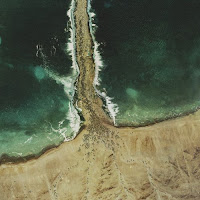
Now more than ever, we cannot believe our eyes and must use the reason God gave us. That reminds me of a great line from "The Blue Cross" the first Father Brown story. When asked how Father Brown was sure that the thief masquerading as a priest was not a priest, Father Brown responds, "'You attacked reason,' said Father Brown. 'It's bad theology.'"

This is the top of Mount Ararat, just as the ark has settled onto the dry ground.
Seriously though, this image came from a website called the Glue Project and they have done a few interesting images called God's Eye View, essentially photoshopping some images to look like events from the Bible. The Ark one was neat. So it this one from the Red Sea Crossing.

Now more than ever, we cannot believe our eyes and must use the reason God gave us. That reminds me of a great line from "The Blue Cross" the first Father Brown story. When asked how Father Brown was sure that the thief masquerading as a priest was not a priest, Father Brown responds, "'You attacked reason,' said Father Brown. 'It's bad theology.'"
Friday, May 29, 2009
Happy Birthday G.K. Chesterton
Gilbert Keith Chesterton, author of Orthodoxy, What's Wrong With The World, the Father Brown Mysteries, and many other well-known books, was born on this day (May 29) in the year 1874. His writing continues to be influential to many readers around the world. If you have not been exposed to his writing, check out the American Chesterton Society (on the sidebar) and read a little about this literary giant.
Saturday, May 9, 2009
Wisdom from Chesterton
Many clever men like you have trusted in civilization. Many clever Babylonians, many clever Egyptians, many clever men at the end of Rome. Can you tell me, in a world that is flagrant with the failures of civilization, what there is particularly immortal about yours?
The Napoleon of Notting Hill
The Napoleon of Notting Hill
Monday, July 7, 2008
Busy couple of weeks
In the last two weeks I have done quite a bit. I first went to Charleston, SC for the Society for Classical Learning conference. I had a wonderful time there listening to and learning from many in the classical school community. Charleston was, of course, fantastic. I made some new friends in schools I hadn't heard of before.
One of the most interesting folks I met was Andrew Kern. Andrew is director of CiRCE in Charlotte, NC and editor of the Quiddity blog on the blogroll. I highly recommend checking his blog out from time to time.
After the SCL conference I went over to my home state of Tennessee and visited family for about a week. While there I did the impossible, I read an entire book. R.J. Rushdoony's Foundations of Social Order made it into my bag because I have been trying to read through the Bannockburn reading list. I found it a fascinating read with much to contribute to my thinking and the church as well. I highly recommend it. Through commentary on the creeds and councils of the early church, Rushdoony points out four key concepts that must be understood to lie at the heart of any social order. 1) A Creed: Every society has one. Even not having one is having one. 2) The State: The State with either be a ministry of justice (its god-given role) or it will attempt to be messianic (its humanistic desire). 3) Sovereignty: This will either be immanent or transcendent. 4) Grace: This element puts every outworking of the social order in proper perspective. Social action only makes sense if done through grace, which must understand the nature of sin and corruption. If done without a proper understanding of grace social action is just humanistic and attempting to fix a problem by adjusting the environment of the sinner. This will never work.
I just got back from Tennessee and think I have found a starting place for my thesis. After finishing Rushdoony I picked up my Agrarianism reading again. Donald Davidson wrote a piece about the New Deal in which he talks about a Agrarian-Distributist view. Once I read that something began clicking into place.
It has been amazing to see that stuff I've been thinking about for years has begun making sense the more I read the agrarians. They have dealt with much of this before. Immigration, industrialism, social action, ancient history, Chesterton and Belloc. All of this has begun to coalesce while I have been reading these guys.
I will have to do some serious study of Davidson and Distributism, but I think I'm going to latch onto that idea (the idea of a Agrarian-Distributist view) and move with it.
I am still blogging about Angels in the Architecture, or rather intend to still blog about it. I already have some later chapters blogged out, but want to do them in order.
One of the most interesting folks I met was Andrew Kern. Andrew is director of CiRCE in Charlotte, NC and editor of the Quiddity blog on the blogroll. I highly recommend checking his blog out from time to time.
After the SCL conference I went over to my home state of Tennessee and visited family for about a week. While there I did the impossible, I read an entire book. R.J. Rushdoony's Foundations of Social Order made it into my bag because I have been trying to read through the Bannockburn reading list. I found it a fascinating read with much to contribute to my thinking and the church as well. I highly recommend it. Through commentary on the creeds and councils of the early church, Rushdoony points out four key concepts that must be understood to lie at the heart of any social order. 1) A Creed: Every society has one. Even not having one is having one. 2) The State: The State with either be a ministry of justice (its god-given role) or it will attempt to be messianic (its humanistic desire). 3) Sovereignty: This will either be immanent or transcendent. 4) Grace: This element puts every outworking of the social order in proper perspective. Social action only makes sense if done through grace, which must understand the nature of sin and corruption. If done without a proper understanding of grace social action is just humanistic and attempting to fix a problem by adjusting the environment of the sinner. This will never work.
I just got back from Tennessee and think I have found a starting place for my thesis. After finishing Rushdoony I picked up my Agrarianism reading again. Donald Davidson wrote a piece about the New Deal in which he talks about a Agrarian-Distributist view. Once I read that something began clicking into place.
It has been amazing to see that stuff I've been thinking about for years has begun making sense the more I read the agrarians. They have dealt with much of this before. Immigration, industrialism, social action, ancient history, Chesterton and Belloc. All of this has begun to coalesce while I have been reading these guys.
I will have to do some serious study of Davidson and Distributism, but I think I'm going to latch onto that idea (the idea of a Agrarian-Distributist view) and move with it.
I am still blogging about Angels in the Architecture, or rather intend to still blog about it. I already have some later chapters blogged out, but want to do them in order.
Wednesday, June 25, 2008
Orthodoxy
I just finished listening to G.K. Chesterton's Orthodoxy (via LibriVox). It is part of a project to work my way through the Bannockburn reading list.
Anyway, it is a book with amazing application. Several points struck me as I listened to it. I used an online version to read back through some that were especially striking. Near the end, Chesterton makes a comment that I have been saying for some time now.
Anyway, it is a book with amazing application. Several points struck me as I listened to it. I used an online version to read back through some that were especially striking. Near the end, Chesterton makes a comment that I have been saying for some time now.
Science knows nothing whatever about pre-historic man; for the excellent reason that he is pre-historic. A few professors choose to conjecture that such things as human sacrifice were once innocent and general and that they gradually dwindled; but there is no direct evidence of it, and the small amount of indirect evidence is very much the other way. In the earliest legends we have, such as the tales of Isaac and of Iphigenia, human sacrifice is not introduced as something old, but rather as something new; as a strange and frightful exception darkly demanded by the gods. History says nothing; and legends all say that the earth was kinder in its earliest time. There is no tradition of progress; but the whole human race has a tradition of the Fall. Amusingly enough, indeed, the very dissemination of this idea is used against its authenticity. Learned men literally say that this pre-historic calamity cannot be true because every race of mankind remembers it. I cannot keep pace with these paradoxes.I have been telling my students for years that the very fact that almost every ancient civilization on record has a flood narrative is evidence that the thing happened, not evidence it did not. But the modernist would rather believe that every ancient civilization was involved in a mass conspiracy than accept that the Bible could be right about something.
Tuesday, February 12, 2008
Still more wisdom from Chesterton
Fairy-tales do not give a child his first idea of bogy. What fairy-tales give the child is his first clear idea of the possible defeat of bogy. The baby has known the dragon intimately ever since he had an imagination. What the fairy-tale provides for him is a St. George to kill the dragon.
Exactly what the fairy-tale does is this: it accustoms him by a series of clear pictures to the idea that these limitless terrors have a limit, that these shapeless enemies have enemies, that these infinite enemies of man have enemies in the knights of God, that there is something in the universe more mystical than darkness, and stronger than strong fear. When I was a child I have stared at the darkness until the whole black bulk of it turned into one negro giant taller than heaven. If there was one star in the sky it only made him a Cyclops. But fairy-tales restored my mental health. For next day I read an authentic account of how a negro giant with one eye, of quite equal dimensions, had been baffled by a little boy like myself (of similar inexperience and even lower social status) by means of a sword, some bad riddles, and a brave heart.
Tremendous Trifles
Exactly what the fairy-tale does is this: it accustoms him by a series of clear pictures to the idea that these limitless terrors have a limit, that these shapeless enemies have enemies, that these infinite enemies of man have enemies in the knights of God, that there is something in the universe more mystical than darkness, and stronger than strong fear. When I was a child I have stared at the darkness until the whole black bulk of it turned into one negro giant taller than heaven. If there was one star in the sky it only made him a Cyclops. But fairy-tales restored my mental health. For next day I read an authentic account of how a negro giant with one eye, of quite equal dimensions, had been baffled by a little boy like myself (of similar inexperience and even lower social status) by means of a sword, some bad riddles, and a brave heart.
Tremendous Trifles
Monday, November 19, 2007
More Wisdom from Chesterton...
From The Ball and the Cross,
"It is the one great weakness of journalism as a picture of our modern existence, that it must be a picture made up entirely of exceptions. We announce on flaring posters that a man has fallen off a scaffolding. We do not announce on flaring posters that a man has not fallen off a scaffolding. Yet this latter fact is fundamentally more exciting, as indicating that the moving tower of terror and mystery, a man, is still abroad upon the earth. That the man has not fallen off scaffolding is really more sensational; and it is also some thousand times more common. But journalism cannot reasonably be expected thus to insist upon the permanent miracles. Busy editors cannot be expected to put on their posters 'Mr. Wilkison Still Safe,' or 'Mr. Jones of Worthing, Not Dead Yet.' They cannot announce the happiness of mankind at all. They cannot describe all the forks that are not stolen, or all the marriages that are not dissolved. Hence the complete picture they give of life is of necessity fallacious: they can only represent that is unusual. However democratic they may be, they are only concerned with the minority."
Think that through as you watch the evening news. These are some interesting thoughts to go along with the conclusions Neil Postman reaches in his book Amusing Ourselves to Death.
"It is the one great weakness of journalism as a picture of our modern existence, that it must be a picture made up entirely of exceptions. We announce on flaring posters that a man has fallen off a scaffolding. We do not announce on flaring posters that a man has not fallen off a scaffolding. Yet this latter fact is fundamentally more exciting, as indicating that the moving tower of terror and mystery, a man, is still abroad upon the earth. That the man has not fallen off scaffolding is really more sensational; and it is also some thousand times more common. But journalism cannot reasonably be expected thus to insist upon the permanent miracles. Busy editors cannot be expected to put on their posters 'Mr. Wilkison Still Safe,' or 'Mr. Jones of Worthing, Not Dead Yet.' They cannot announce the happiness of mankind at all. They cannot describe all the forks that are not stolen, or all the marriages that are not dissolved. Hence the complete picture they give of life is of necessity fallacious: they can only represent that is unusual. However democratic they may be, they are only concerned with the minority."
Think that through as you watch the evening news. These are some interesting thoughts to go along with the conclusions Neil Postman reaches in his book Amusing Ourselves to Death.
Saturday, November 10, 2007
Wisdom from Chesterton
From Orthodoxy:
"Courage is almost a contradiction in terms. It means a strong desire to live taking the form of a readiness to die. 'He that will lose his life, the same man shall save it,' is not a piece of mysticism for saints and heroes. It is a piece of every-day advice for sailors or mountaineers. It might be printed in an Alpine guide or a drill-book. This paradox is the whole principle of courage; even of quite earthly or quite brutal courage. A man cut off by the sea may save his life if he will risk it on the precipice. He can only get away from death by continually stepping within an inch of it. A soldier, surrounded by enemies, if he is to cut his way out, needs to combine a strong desire for living with a strange carelessness about dying. He must not merely cling to life, for then he will be a coward, and will not escape. He must not merely wait for death, for then he will be a suicide, and will not escape. He must seek his life an a spirit of furious indifference to it; he must desire life like water and yet drink death like wine. No philosopher, I fancy, has ever expressed this romantic riddle with adequate lucidity, and I certainly have not done so. But Christianity has done more: it has marked the limits of it in the awful graves of the suicide and the hero, showing the distance between him who dies for the sake of living and him who dies for the sake of dying. And it has held up ever since above the European lances the banner of the mystery of chivalry: the Christian courage which is a disdain of death; not the Chinese courage which is a disdain of life."
"Courage is almost a contradiction in terms. It means a strong desire to live taking the form of a readiness to die. 'He that will lose his life, the same man shall save it,' is not a piece of mysticism for saints and heroes. It is a piece of every-day advice for sailors or mountaineers. It might be printed in an Alpine guide or a drill-book. This paradox is the whole principle of courage; even of quite earthly or quite brutal courage. A man cut off by the sea may save his life if he will risk it on the precipice. He can only get away from death by continually stepping within an inch of it. A soldier, surrounded by enemies, if he is to cut his way out, needs to combine a strong desire for living with a strange carelessness about dying. He must not merely cling to life, for then he will be a coward, and will not escape. He must not merely wait for death, for then he will be a suicide, and will not escape. He must seek his life an a spirit of furious indifference to it; he must desire life like water and yet drink death like wine. No philosopher, I fancy, has ever expressed this romantic riddle with adequate lucidity, and I certainly have not done so. But Christianity has done more: it has marked the limits of it in the awful graves of the suicide and the hero, showing the distance between him who dies for the sake of living and him who dies for the sake of dying. And it has held up ever since above the European lances the banner of the mystery of chivalry: the Christian courage which is a disdain of death; not the Chinese courage which is a disdain of life."
Subscribe to:
Comments (Atom)